
Permitted Development Rights: What You Can Build Without Planning Permission
Permitted Development Rights are a set of rules that allow homeowners to undertake specific types of building work without needing to apply for planning permission. These rights are granted by the government and are designed to streamline minor developments, making it easier for homeowners to improve or extend their properties.
However, it’s important to note that Permitted Development Rights are not a free for-all. There are strict limits and conditions that must be adhered to, depending on the type of property you own and its location. For example, PDR may differ for houses, flats, and commercial properties, and certain areas (such as conservation areas or national parks) may have additional restrictions.
Here’s a breakdown of some common projects that can often be carried out under Permitted Development Rights:
- Single-Storey Extensions: You can extend your home by up to 8 metres for detached houses or 6 metres for semi-detached or terraced houses (under prior approval). The extension must not exceed 4 metres in height.
- Two-Storey Extensions: These are allowed but are subject to stricter rules, such as being no closer than 7 metres to the rear boundary and not exceeding the height of the existing roof.
- Loft conversions are a popular way to add space without extending the footprint of your home. Under PDR, you can add up to 40 cubic metres of additional roof space for terraced houses and 50 cubic metres for detached houses. Dormer windows are often permitted, but they must not extend beyond the plane of the existing roof slope.
- You can build outbuildings such as garden sheds, garages, or home offices without planning permission, provided they are single-storey, cover less than 50% of the garden area, and are not used as living accommodation. The maximum height is 2.5 metres if located within 2 metres of a boundary.
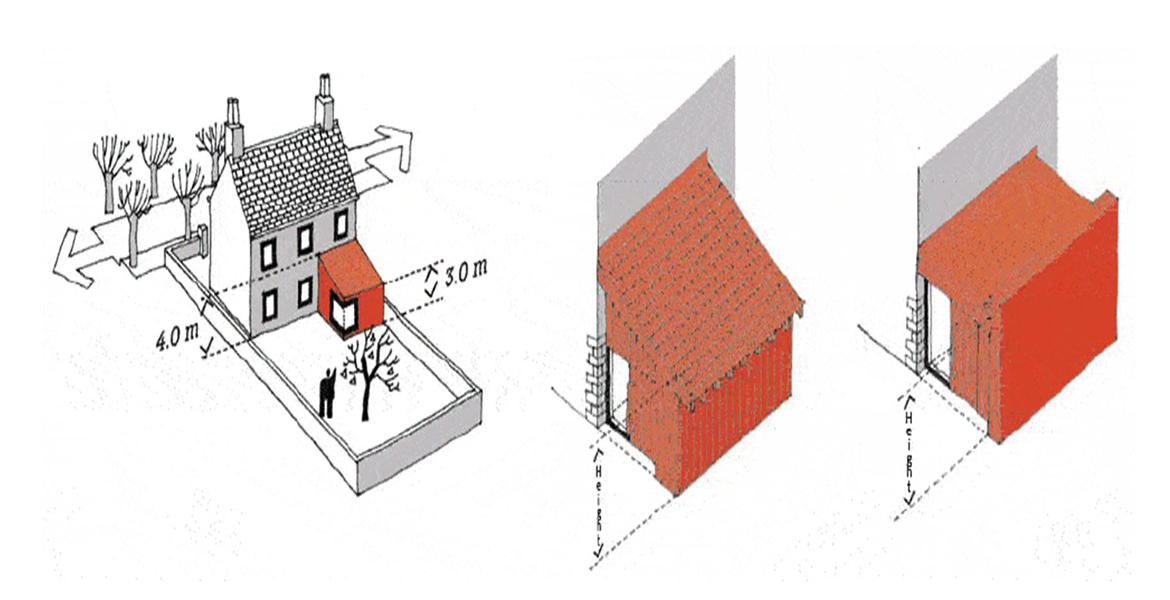
- A porch can be added to the front of your home without planning permission, as long as it does not exceed 3 square metres in area and is not taller than 3 metres.
- You can install new windows and doors without planning permission, but if your property is listed or in a conservation area, you may need additional consent.
- Solar panels can be installed on roofs under PDR, provided they do not protrude more than 200mm beyond the roof slope and are not installed on a listed building or in a conservation area.
- You can create or extend a driveway without planning permission, but you must use permeable materials to prevent water runoff.
While Permitted Development Rights offer flexibility, there are important factors to consider before starting your project:
- Property Type: PDR rules vary depending on whether you own a house, flat, or commercial property. Flats and maisonettes generally have fewer permitted development rights compared to houses.
- Location Restrictions: If your property is in a designated area (e.g., a conservation area, Area of Outstanding Natural Beauty, or World Heritage Site), additional restrictions may apply. Listed buildings almost always require planning permission for any alterations.
- Location Restrictions: If your property is in a designated area (e.g., a conservation area, Area of Outstanding Natural Beauty, or World Heritage Site), additional restrictions may apply. Listed buildings almost always require planning permission for any alterations.
- Size and Height Limits: Every project under PDR has specific size and height restrictions. Exceeding these limits will require a full planning application.
- Neighbour Consultation Scheme: For larger single-storey rear extensions, you may need to notify your neighbours under the Neighbour Consultation Scheme, even if the project falls under PDR.
- Building Regulations: Even if your project doesn’t require planning permission, it must still comply with building regulations to ensure safety and quality standards.
- Prior Approval: Some projects, such as larger extensions or changes of use, may require “prior approval” from your local planning authority. This is not the same as full planning permission but still involves a formal process.
Before starting any work, it’s essential to confirm whether your project falls under Permitted Development Rights. Here’s how you can do this:
- Consult the Government’s Technical Guidance: The UK government provides detailed guidance on PDR, which can be found on the Planning Portal website.
- Apply for a Lawful Development Certificate (LDC): While not mandatory, obtaining an LDC from your local planning authority can provide peace of mind. It confirms that your project is lawful and can be helpful when selling your property in the future.
- Seek Professional Advice: An architectural designer or planning consultant can help you navigate the rules and ensure your project complies with all regulations.
Permitted Development Rights offer homeowners a fantastic opportunity to enhance their properties without the need for full planning permission. From extensions and loft conversions to outbuildings and solar panels, there’s a wide range of projects you can undertake—provided you stay within the rules.
However, it’s crucial to do your homework and ensure your project complies with all relevant regulations. When in doubt, seek professional advice or apply for a Lawful Development Certificate to avoid any potential issues down the line.
By understanding and utilising Permitted Development Rights, you can unlock the potential of your property and create the home of your dreams with minimal hassle. Happy building!